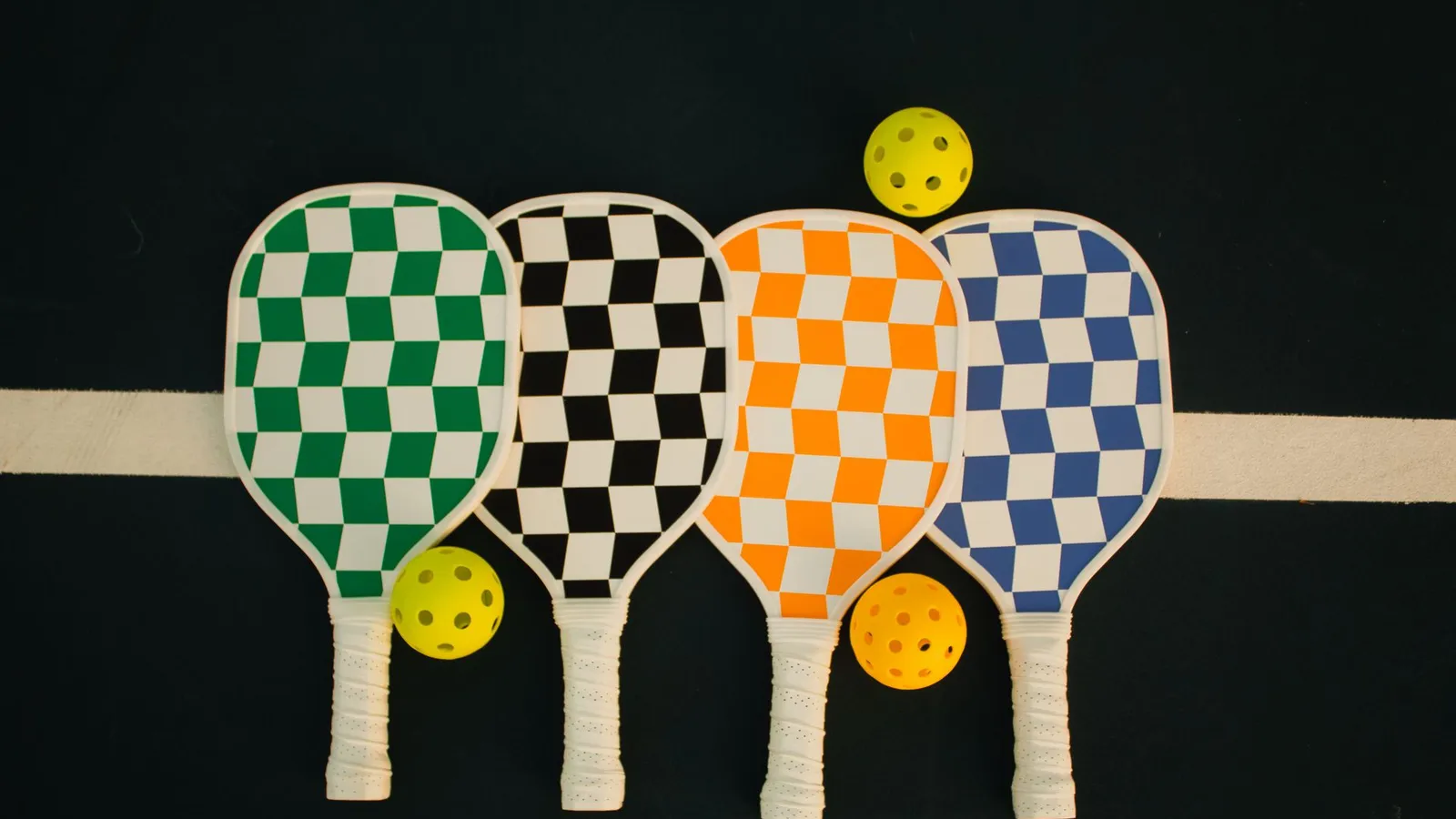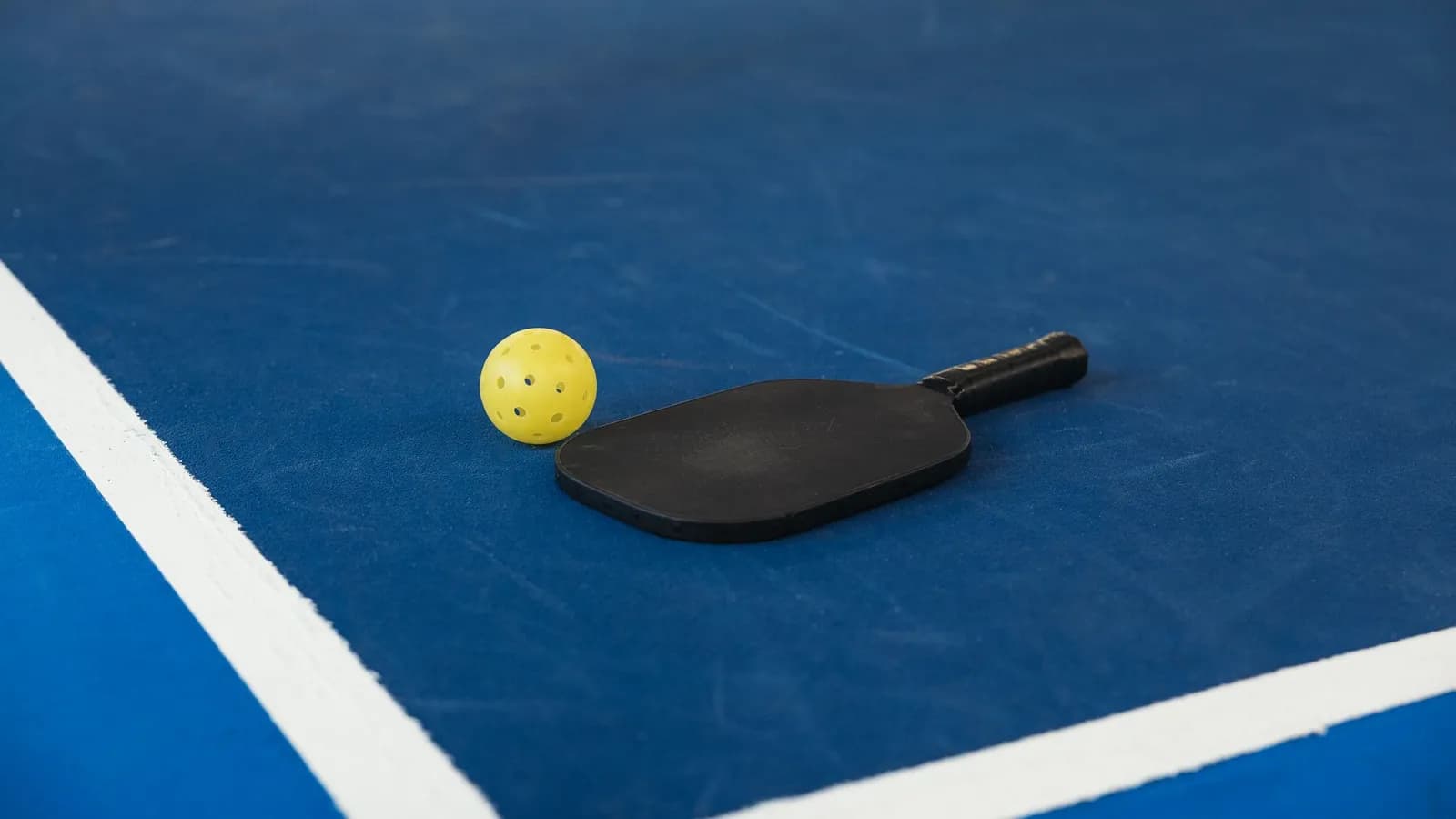
To dink in pickleball, stand balanced near the kitchen line and hit the ball softly so it just clears the net and drops into the other team's kitchen. Use a relaxed grip, a short swing and a low finish. The goal is a ball so slow and low that the other team has to hit up, which takes away their chance to attack. This is the core of the soft game in our strategy guides.
What is a dink in pickleball?
A dink is a slow, soft shot played into the non-volley zone. Wikipedia says dinks "are used to limit the opponent's ability to attack." The reason is simple. A ball returned too high can be hit with a drive or an overhead smash. A dink gives them nothing to hit hard.
A dink is a patient shot. It won't win the rally by itself. Its job is to keep the ball low until someone makes a mistake or pops one up.
Where do you stand to dink?
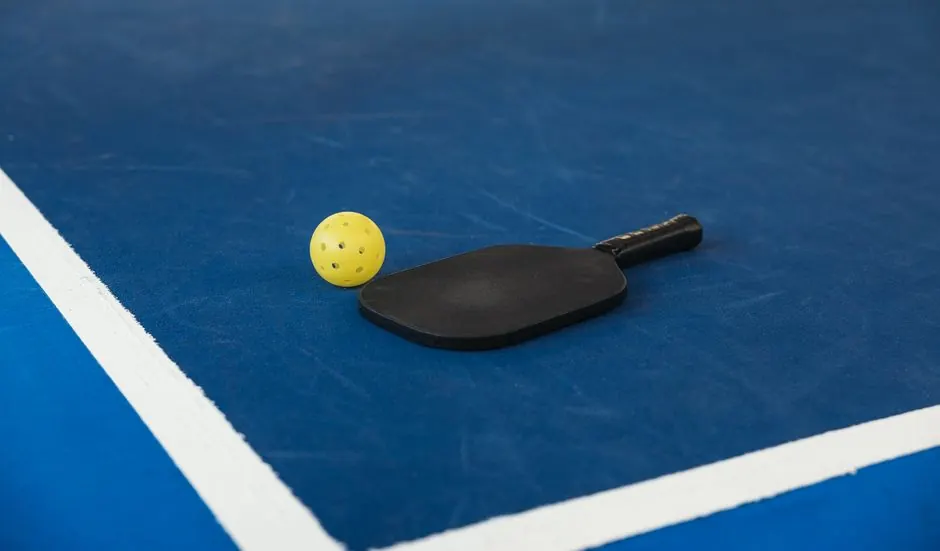
Photo by Mason Tuttle on Pexels
Near the kitchen line, but you need to know the zone. The kitchen is a 7-foot area on each side of the net. Wikipedia notes that a player standing there may not strike the ball before it has bounced. The full details are in our guide to the kitchen rule.
| Situation | Allowed? |
|---|---|
| Ball has bounced, you stand in the kitchen to hit it | Yes |
| Ball is in the air, you hit it from outside the kitchen | Yes |
| Ball is in the air, you hit it from inside the kitchen or on the line | No, fault |
| Your momentum carries you into the kitchen after a volley | No, fault |
The rules summary is clear on the last row. If momentum carries you, or anything you wear or carry, into the zone while volleying, that is a fault, even if the ball is already dead. Players may stand in the zone at other times.
In practice, most dinks are played off a bounce, from just behind the line or with a foot inside the kitchen. When you volley a dink out of the air, stay back and stay balanced.
When does dinking start?
After the serve and the return have each bounced. Under the two-bounce rule, the ball must bounce once on each side before anyone volleys. As the rules summary puts it, the ball must hit twice, once on each side, before it can be volleyed.
After those two bounces, both teams can volley or play the ball off the bounce. That is why rallies move forward. The serving team moves up to the kitchen line, the receiving team does the same, and the dinking begins when both teams are at the line.
How do you hit the dink?
Keep everything small. These are the basics:
- Get balanced. Stand with your knees slightly bent and your weight forward. Move your feet to the ball rather than reaching for it.
- Relax your grip. A tight grip sends the ball long. A loose one lets the paddle absorb the pace.
- Use a short, smooth swing. Think of a small pendulum from the shoulder, with a firm wrist. There is no backswing to speak of.
- Meet the ball in front of you. Contact in front gives you control. Contact beside or behind your body sends the ball high.
- Finish low. A high follow-through lifts the ball. Stop the paddle soon after contact and keep it below the net line.
- Clear the net by a little. The ball should rise just enough to cross the tape and drop into the kitchen.
If the ball is coming in fast, open the paddle face slightly and let it soak up the pace. Your aim is to give back less speed than you received.
Where do you aim a dink?
At a spot, never at nothing. Aimless dinks drift to the middle and become easy to attack. Pick a target in the kitchen: the corner away from the other player, the spot at their feet, or the area near their backhand. Then make them move or reach.
Keep the ball low and be patient. When a dink sits up above the net, that's your chance to speed it up. When yours sits up, expect the same. In doubles, your partner should stay level with you at the line, so check where to stand in doubles before you start.
What mistakes should you avoid?
Most dink errors come from a handful of habits.
- Popping the ball up. Usually a tight grip, a big swing or a high finish.
- Hitting too hard. A fast dink lands deep and gives the other team a free attack.
- Stepping in on a volley. Check your feet before you hit out of the air.
- Reaching. If you lunge, you lose control. Move your feet first.
- Dinking without a plan. Pick a spot every time.
If you want to improve, practise with a partner. Dink cross-court or straight ahead and count how many you can keep in a row. Warm up first, and see a professional if something hurts.
Try it
Play a few games where the only rule is that nobody speeds the ball up until it sits above the net. You will see how quickly the rally settles into a soft game. Once you are playing, Pickle Call keeps the score so you can focus on the ball. It handles singles and doubles scoring, including the server sequence and the call, and it is coming to iPhone, iPad and Apple Watch.
Bottom line
A dink is a soft, low shot into the kitchen that makes the other team hit up. Stay balanced, keep the grip loose, swing short, finish low and aim at a spot. Remember that you cannot volley from inside the kitchen, so check your feet when the ball is in the air.
Questions
- Can you dink out of the air?
- Yes, but not from inside the kitchen. A volley dink has to be played with both feet outside the zone, and your momentum must not carry you in. If it does, it is a fault.
- Does a dink have to land in the kitchen?
- No rule says so. A dink is meant to land in the kitchen so the other team has to hit up, but a soft shot that lands just past the line is still in play.
- Can I step into the kitchen to dink?
- Yes, once the ball has bounced. You can stand in the kitchen to play a bounced ball. You just cannot volley from there.
- How do I stop popping dinks up?
- Keep the grip relaxed, the swing short and the finish low, and aim to clear the net by a small margin. A high ball is the one the other team attacks.