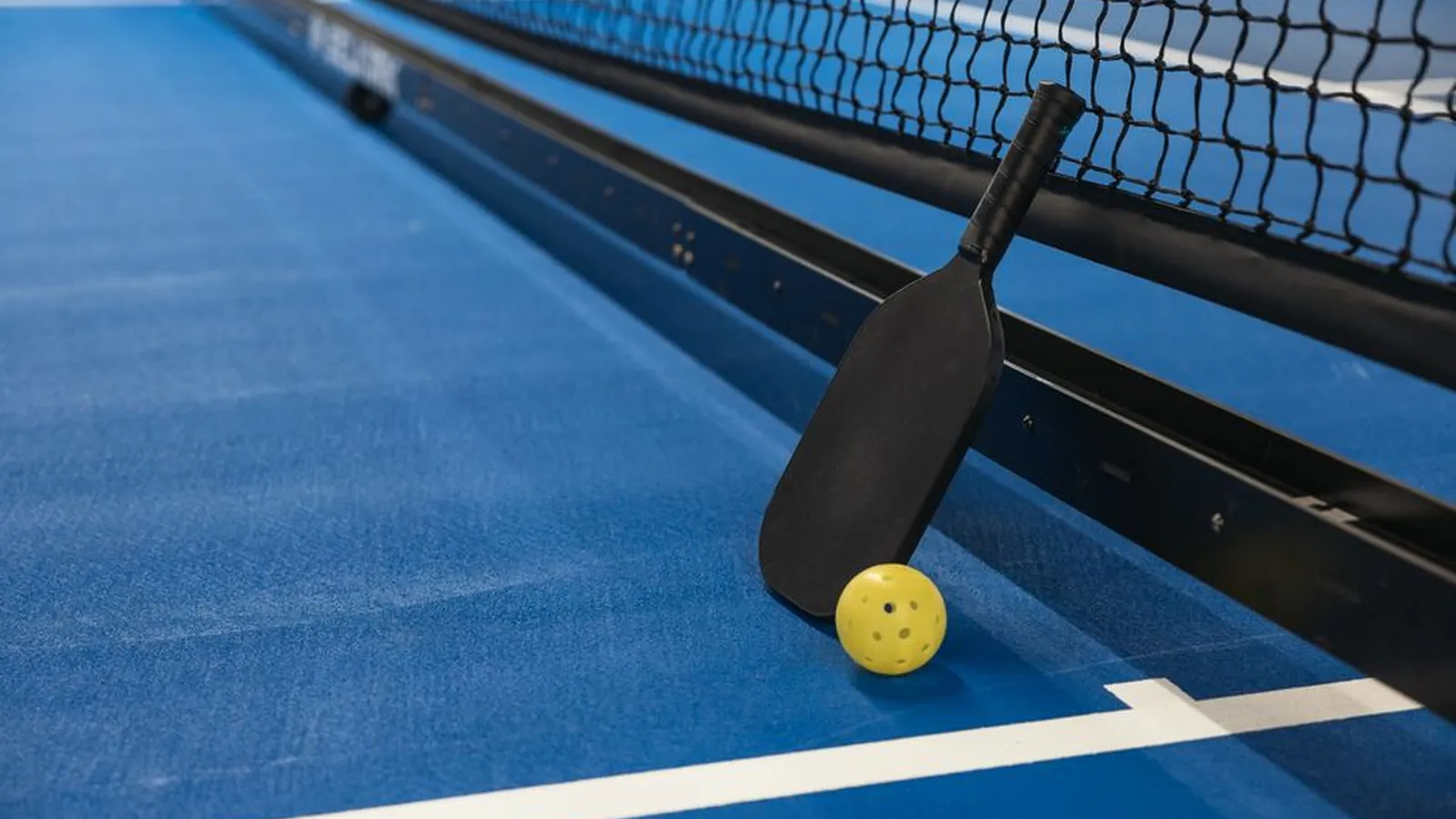

The two-bounce rule says the ball must bounce once on each side of the net before anyone is allowed to volley. In practice that means the receiving side lets the serve bounce, and then the serving side lets the return bounce. From the third shot on, you can hit the ball in the air or off the bounce.
It's one of the first rules new players trip over. Here is who has to wait, why the rule exists, and what happens when someone forgets. More like it are in our pickleball rules guides.
What is the two-bounce rule?
The ball must bounce twice, once on each side of the court, before players can volley. The official rules summary puts it that way: after both bounces, either team can play the ball on the bounce or in the air.
A volley is simply a ball you hit without letting it bounce first. The rule does not ban volleys. It only holds them back until the serve and the return have each bounced.
Who has to let the ball bounce?
Both sides, once each, on the first two shots of a rally.
| Shot | Who hits it | What must happen |
|---|---|---|
| Serve | Server | Lands in the receiver's service court |
| Return | Receiving side | Must let the serve bounce, then hit it |
| Third shot | Serving side | Must let the return bounce, then hit it |
| Fourth shot onward | Either side | Volley or play it off the bounce |
The serving side has to stay back and wait for the return to bounce on their side before moving up to volley. That goes for both partners in doubles, not just the server. If you are ever unsure who is serving in the first place, see Am I server 1 or server 2.
Why does the rule exist?
Without it, the serving team could rush the net and volley every return. The international rules summary says the double bounce rule eliminates the serve and volley advantage and prolongs the rallies.
Making the server wait gives the receiving side time to get set. It's why rallies tend to open with a deep return and a drop or a drive from the back, not a volley at the net.
Does it change in singles?
No. Singles uses the same rule: the receiver lets the serve bounce, and the server lets the return bounce before anyone volleys. There is only one player on each side, so there is no partner to remind, which makes it easier to remember.
How is it different from the kitchen rule?
Two separate rules, and people mix them up all the time.
- Two-bounce rule: applies only to the first two shots of a rally (the serve return and the third shot). After that it is finished for the rest of the rally.
- Kitchen rule: the kitchen, or non-volley zone, extends 7 feet from the net. You cannot volley while standing in it or touching its line, on any shot, for the whole rally.
You may step into the kitchen to play a ball that has already bounced there. So a ball that lands in the kitchen is fair game on the bounce, even when volleys are allowed everywhere else. If you are checking whether a volley was legal, ask two questions: have both bounces happened, and are my feet outside the kitchen?
What happens when someone breaks it?
Hitting the serve or the return out of the air is a fault, and the rally is lost. Letting the ball bounce twice on your side before you play it is also a fault, and that one applies on every shot, not just the first two.
There is one small exception from the rule summary. If the ball bounces twice off your paddle while you are making one continuous forward motion, the shot is legal.
Who wins the rally after a fault depends on who made it. If the receiving side volleys the serve, the server wins the rally and, in side-out scoring, scores a point. If the serving side volleys the return, the serve goes to the next server or across the net. That is where the call and the server number matter.
What are the common mistakes?
A few come up again and again at the courts:
- The server's partner rushes in. The third shot also has to bounce, so both partners on the serving side stay back until the return has bounced.
- The receiver steps in and volleys the serve. The serve must bounce first, even if it is a slow one that sits up.
- Treating it as a first-point rule. It applies on every rally, including the one after a side out.
- Forgetting it ends. After the first two bounces, nobody has to let the ball bounce again. Volley freely, as long as you are not in the kitchen.
A quick habit helps. Say "bounce, bounce" to yourself as the serve and return go over. Then you know the rally is open.
Try it with Pickle Call
Pickle Call keeps the call, the server number and the serving side for you, so a two-bounce fault is one tap on the side that won the rally. It handles side-out scoring and rally scoring, singles and doubles, in games to 11, 15 or 21. It is coming to iPhone, iPad and Apple Watch. For the scoring side of the same rally, read how to keep score in pickleball doubles.
Bottom line
The serve bounces, the return bounces, and then the rally is open. Both players on each side have to wait, every rally, and anything hit out of the air before then is a fault.
Questions
- Does the serve have to bounce in the two-bounce rule?
- Yes. The serve lands in the receiver's service court, and the receiving side lets it bounce before returning it. Hitting it out of the air is a fault.
- Can the server's partner volley the return?
- Not on the first return. The serving side, both players, must let the return bounce before playing it. After that, anyone on either side may volley.
- Is it a fault to let the ball bounce twice on my side?
- Yes. If the ball bounces a second time on your side before you hit it, you lose the rally. The rule is about the first two shots, but this one applies to every shot.
- Does the two-bounce rule apply on every rally?
- Yes. Every rally starts with a serve, a return that bounces, and a third shot that bounces. Only then is the rally open to volleys.