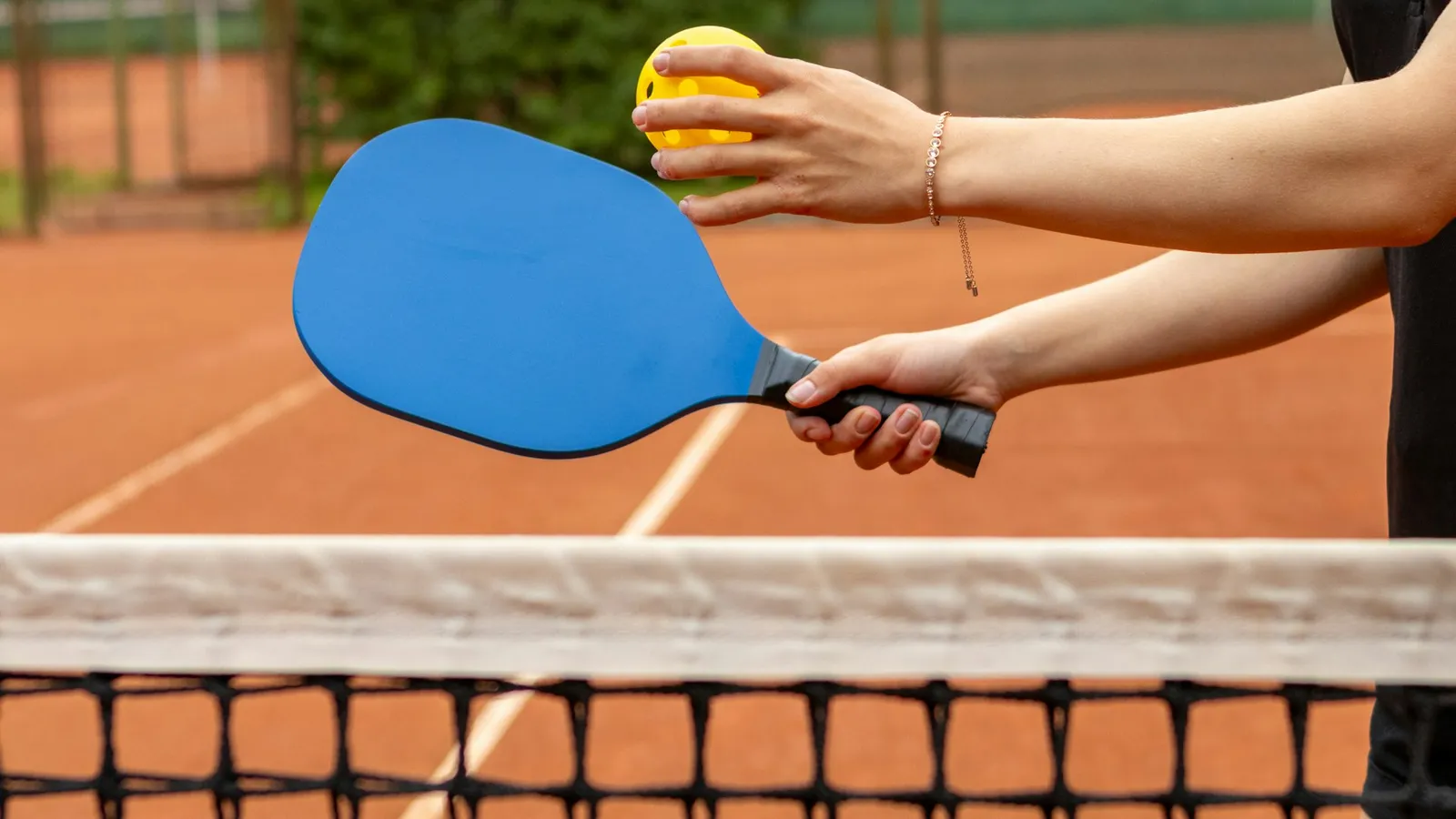
A legal pickleball serve is hit underhand or as a drop serve, from behind the baseline, diagonally into the opposite service court. It has to clear the kitchen line, and you get one attempt. This guide walks through each rule in the order you meet it on court. It is one of our rules guides, so you can keep reading when you are done.
What counts as a legal serve?
There are two ways to serve: the volley serve and the drop serve. Pick whichever feels easier. You can stick with one all game or switch from point to point.
For a volley serve, the ball is hit out of the air, and three things must be true at contact:
- Your arm is moving in an upward arc.
- The paddle meets the ball at or below waist level.
- The head of the paddle is not higher than the highest part of your wrist.
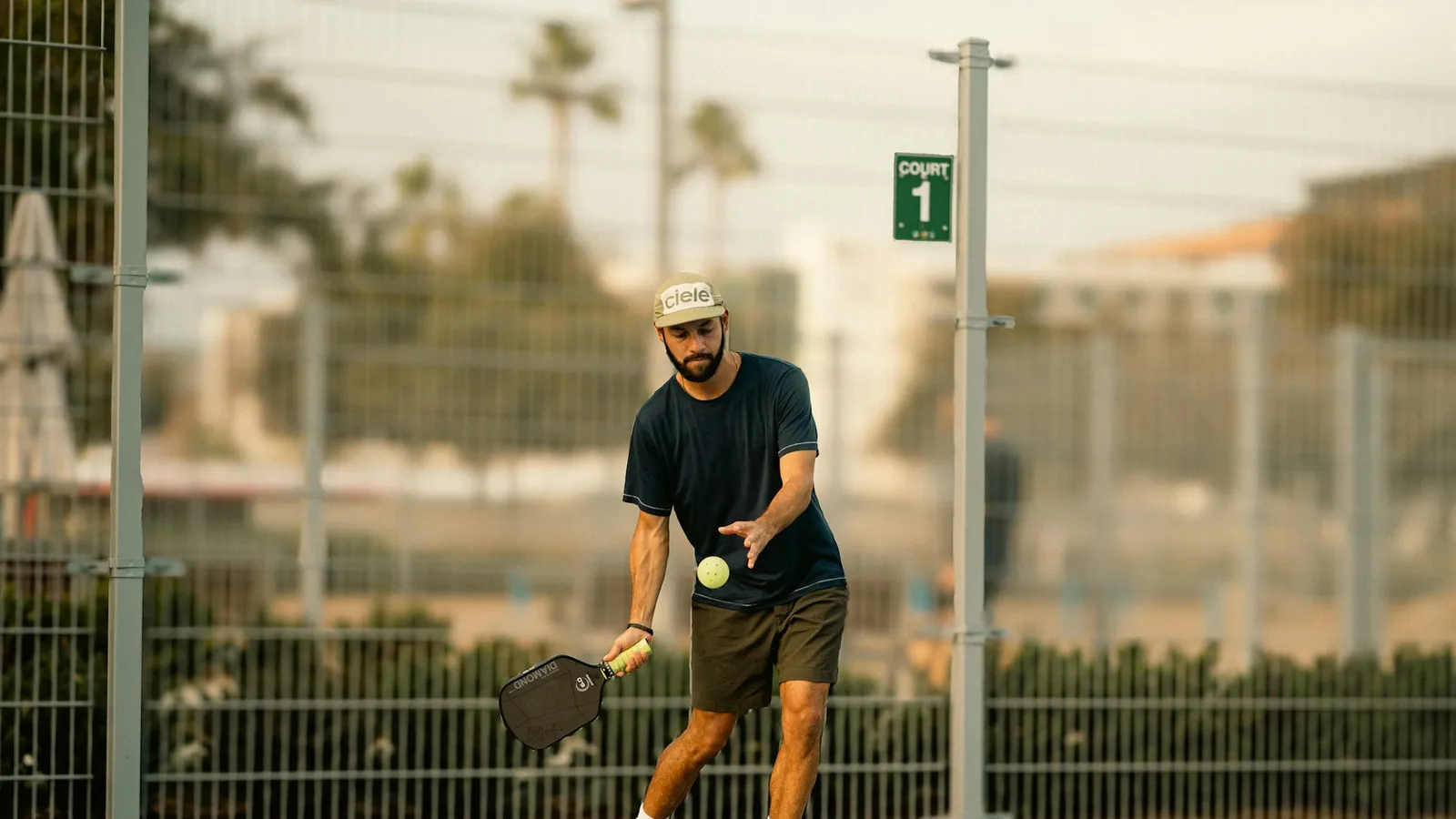
For a drop serve, you drop the ball and let it bounce before you hit it. You may not toss it or push it. The same summary says the arc, waist and wrist rules do not apply to a drop serve, which is why many newer players like it.
| Volley serve | Drop serve | |
|---|---|---|
| Ball is hit | Out of the air | After it bounces |
| Arm and paddle rules | Upward arc, waist level, paddle head below wrist | None of those apply |
| Foot, court and kitchen rules | Same | Same |
Where do you have to stand?
At the moment you hit the ball, at least one foot must be behind the baseline. Neither foot may touch the court itself, or the area outside the imaginary extension of the sideline or centerline. So no stepping on the baseline, and no stepping into the court as you swing.
Where does the serve have to land?
The serve goes diagonally crosscourt and must land in the opposite service court. A serve that lands in the wrong court, long, wide or into the net, is a fault.
The kitchen is the one line to watch. The kitchen line counts as short for a serve, so a serve that touches it is a fault. Every other line is good, which means a serve that clips the baseline, sideline or centerline is in. If you want the full picture of the zone, read our guide to the kitchen rule.
One thing varies: what happens when a serve clips the net and still lands in the right court. Rule sets and event rules have not always treated this the same way, so check the rules for your league or event.
How many tries do you get?
One. Each server gets a single serve attempt, and any break of a service rule is a fault. No second serve. A safe, deep serve beats a risky one.
What happens after the serve?
The serve starts the two-bounce rule. The receiving side must let the serve bounce before returning it, and then the serving side must let that return bounce before hitting it. After that, either side may volley. Players call it the double bounce rule, and it is why the server's partner usually stays back at first.
Who serves, and from which side?
Only the serving side can score. When the serving side wins a rally it gets a point, and when the receiving side wins, the serve passes with no point.
In doubles, a game starts at 0-0-2, and only one player on the first serving team serves before the serve passes. After that, each player on a team serves in turn. The right-hand court (the even court) serves first after a side out. Our guides to who serves first after a side out and to server 1 or server 2 cover the order in detail.
In singles, you serve from the right court when your score is even and from the left court when it is odd.
What are the most common service faults?
Most serve faults come from a short list. Check these before you call a serve out:
- The ball lands in the kitchen or touches the kitchen line.
- The ball lands outside the opposite service court, or in the wrong court.
- The server's foot is on the court or over the line extension at contact.
- A volley serve is hit above the waist, with the paddle head above the wrist, or without an upward arc.
- A drop serve is tossed or pushed, not simply dropped.
- The wrong player serves, or the server serves from the wrong side. Fix this as soon as you notice it.
If a fault is called, say why. A short, calm call such as "foot fault" or "short" ends most arguments, and it helps everyone on court learn the rule.
Which serve should a new player use?
The rules do not rank the two serves, so it comes down to comfort. A drop serve removes the waist, wrist and arc checks, so there is less to get wrong. Some players prefer a volley serve once they have practised it. Either way, aim for a deep, steady serve into the middle of the court. A serve that lands in is worth more than one that tries to win the point and ends up as a fault.
Try it
Knowing the serve rules is half the job. Keeping track of who serves next is the other half. With side-out scoring in Pickle Call, you tap the side that won the rally, and the app keeps the score, the server number and the serving side for you. Pickle Call is coming to iPhone, iPad and Apple Watch.
Bottom line
Serve underhand or drop the ball, keep a foot behind the baseline, aim diagonally past the kitchen line, and remember you have one try. Then let the serve bounce. If a rule is unclear for your event, check its rulebook first.
Questions
- How many serve attempts do you get in pickleball?
- One. If the serve is a fault, the serve passes on. In doubles, the first server of a game passes it to the other team, and after that the partner gets a turn before the team loses the serve.
- Can you bounce the ball before serving?
- Only with a drop serve. For a volley serve you hit the ball out of the air, with an upward swing and contact at or below the waist.
- Does a serve that lands on the kitchen line count?
- No. The kitchen line is short for a serve, so a serve that touches it is a fault. A serve that touches any other line is good.
- What is the two-bounce rule?
- The serve must bounce before it is returned, and the return must bounce before the serving side hits it. After those two bounces, either side may volley.
- Can you step on the baseline when you serve?
- No. At contact, at least one foot must be behind the baseline, and neither foot may touch the court or the area outside the extension of the sideline or centerline.